Vision
Excellence in patient care, delivered in a way people are able to trust.
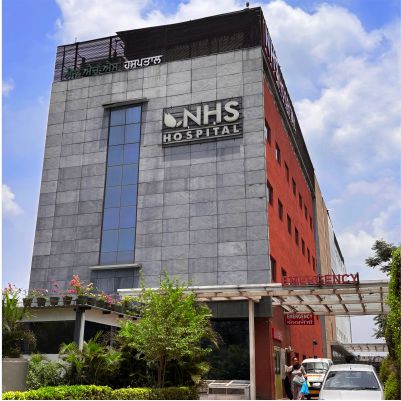
With more than 200 beds, NHS Hospital works at tertiary level in four areas above all: cardiac sciences, neurosciences, orthopaedics and emergency medicine. Families come from across North India because the consultant, the equipment and a treatment plan they can follow are all in the same building.
Other hospitals send us their harder cases — revision joint surgery, neuro-critical emergencies, difficult gastroenterology, advanced kidney treatment. What we recommend is settled against clinical quality standards, never against a commercial target.
Excellence in patient care, delivered in a way people are able to trust.
Healthcare that is both effective and efficient, achieved by working as a team rather than as individuals.
Teamwork and integrity; quality and innovation; and compassion above all of them.
A group of doctors already running long-standing practices in Jalandhar pooled their experience to build this hospital. The brief for the building was practical: room to park, patient flow areas mapped out in advance, and safety and comfort designed in from the start rather than retrofitted.
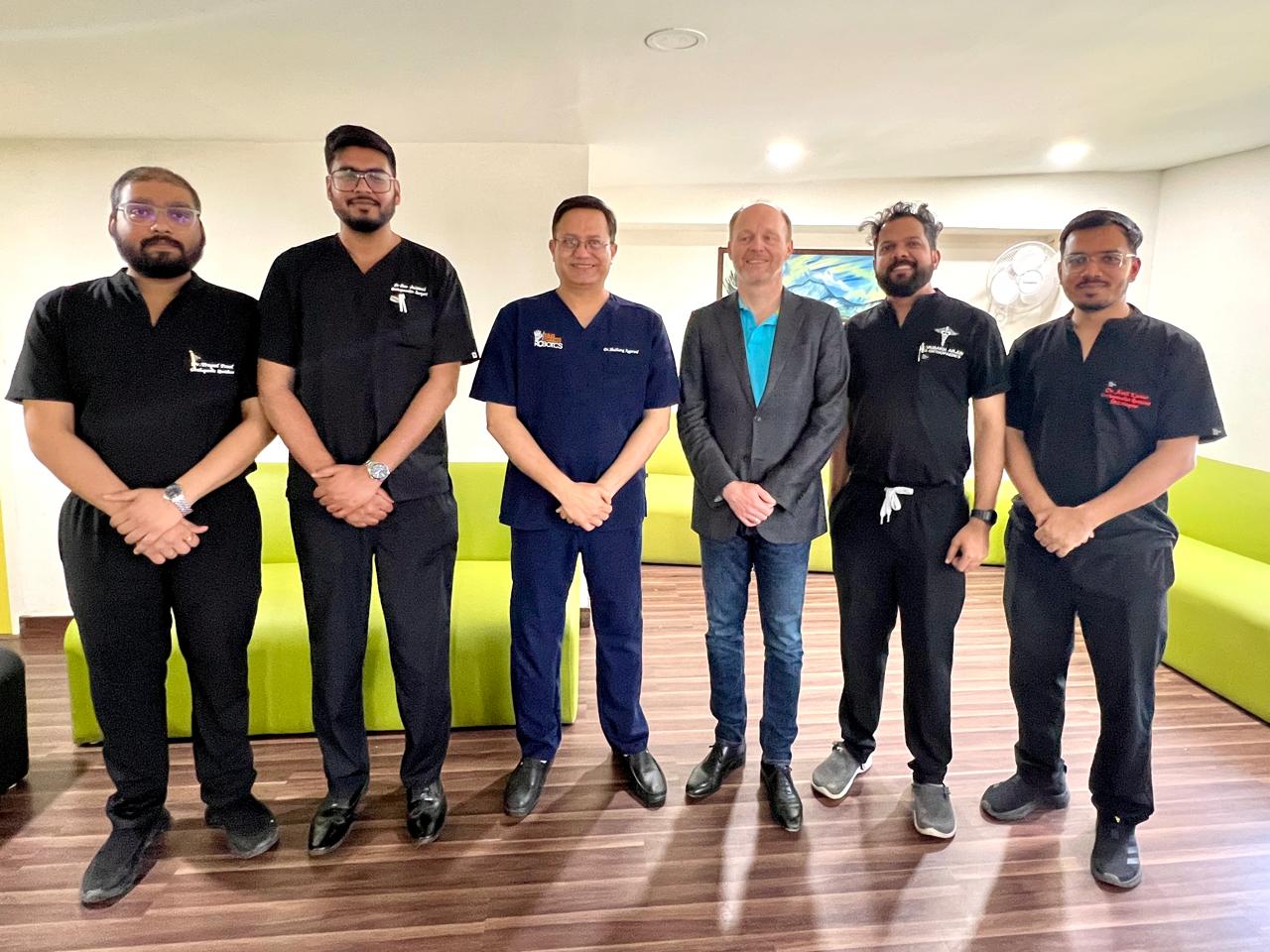
Each institute is led by a super-specialty qualified consultant, with diagnostics and critical care in the same building.
Advanced endoscopy, colonoscopy and ERCP, plus painless FibroScan for fatty liver and liver stiffness.
Angiography and angioplasty review — advised a stent? Get a second opinion first.
Kidney stones and prostate enlargement treated with PCNL, RIRS and holmium laser (HoLEP) — minimally invasive, with a faster recovery.
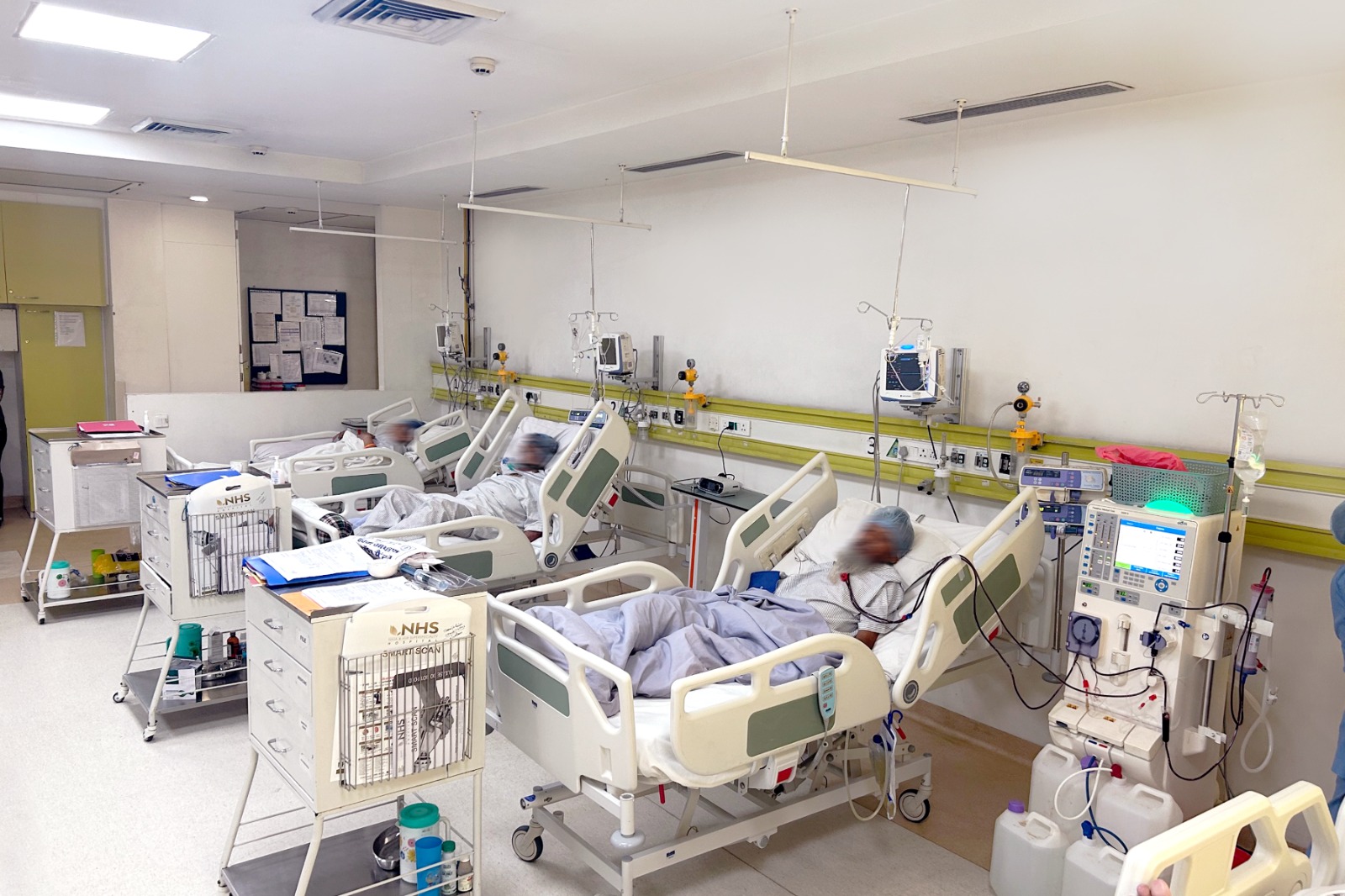
Maintenance haemodialysis, critical care nephrology, renal biopsy and kidney failure care.
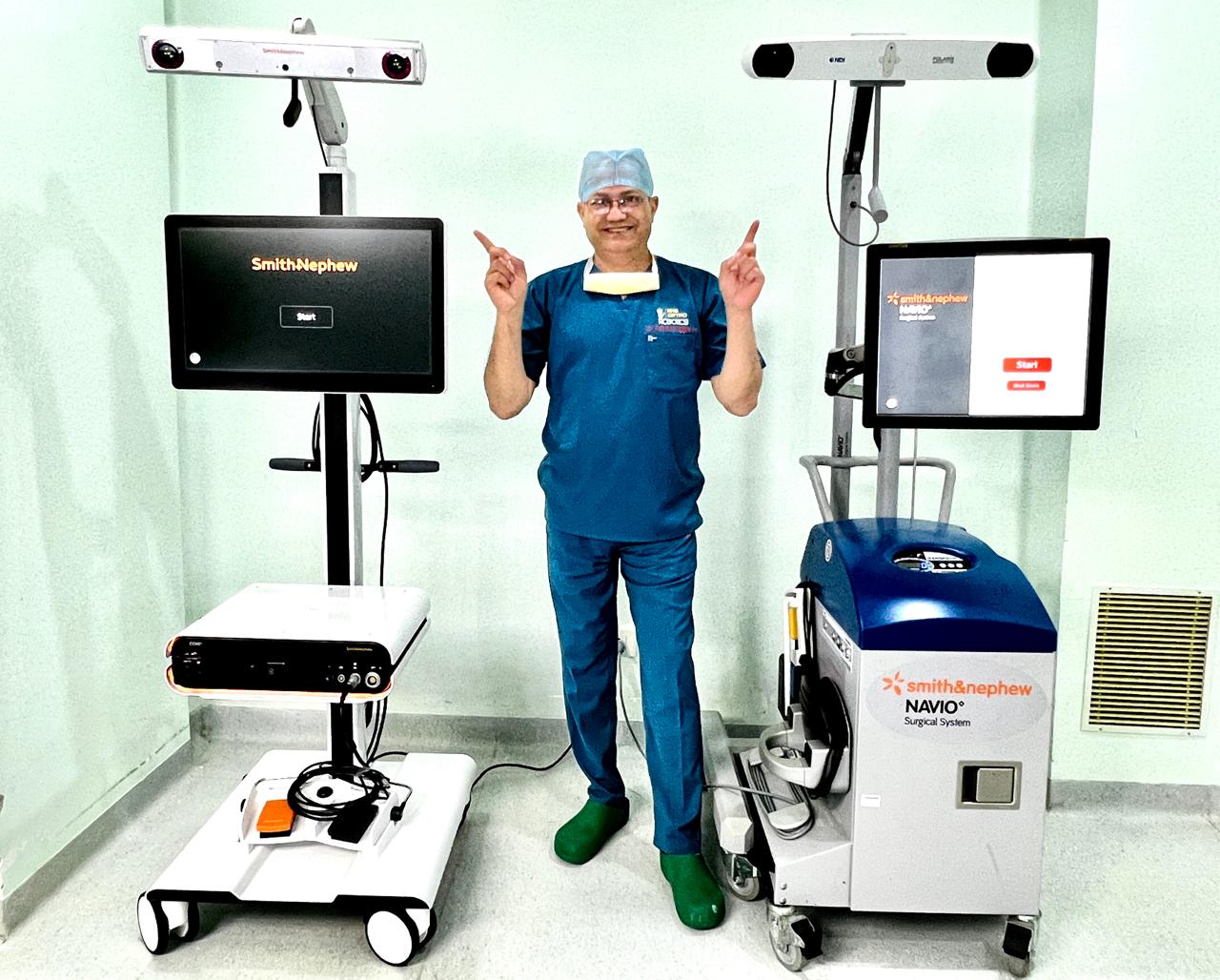
Robotic knee and hip replacement — the programme that pioneered robotic-assisted knee surgery in the region.
Beyond the five institutes above, NHS Hospital runs a full set of clinical departments, so a patient who needs two or three teams does not have to travel between hospitals.
Emergency, imaging, theatres, intensive care and the insurance desk are all in the same building, so a workup that would normally take days across three addresses is finished here.
A round-the-clock emergency and trauma desk, backed by trauma surgeons, lab diagnostics at any hour and specialised ICU support.
Intensivist-supervised critical care for unstable and post-surgical patients across all specialties, with regular sterility swabbing of the unit.
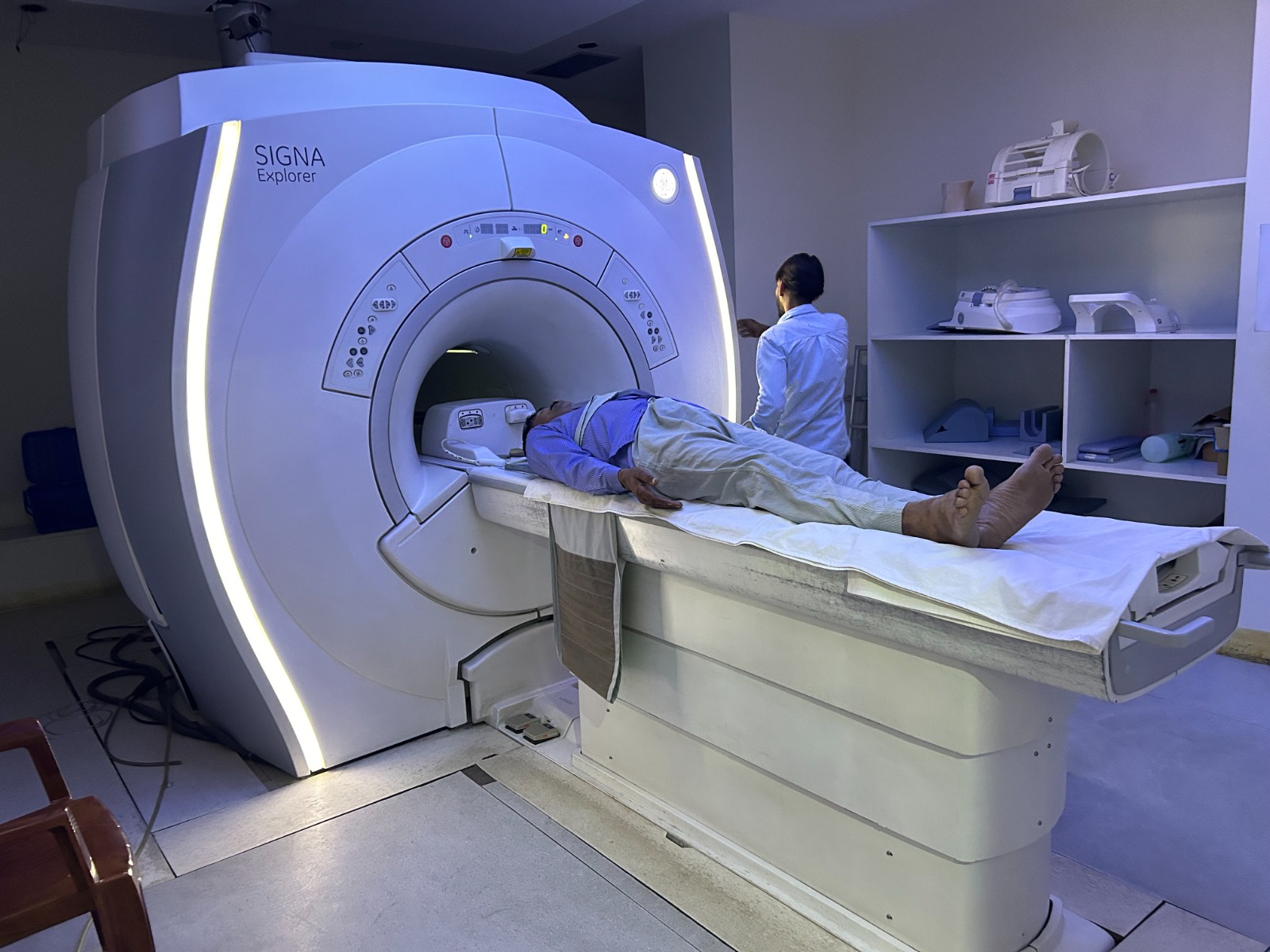
Silent MRI, low-radiation CT, digital X-ray, digitised mammography and ultrasound. MRI and CT are available 24 hours, so an emergency scan does not wait for the morning.
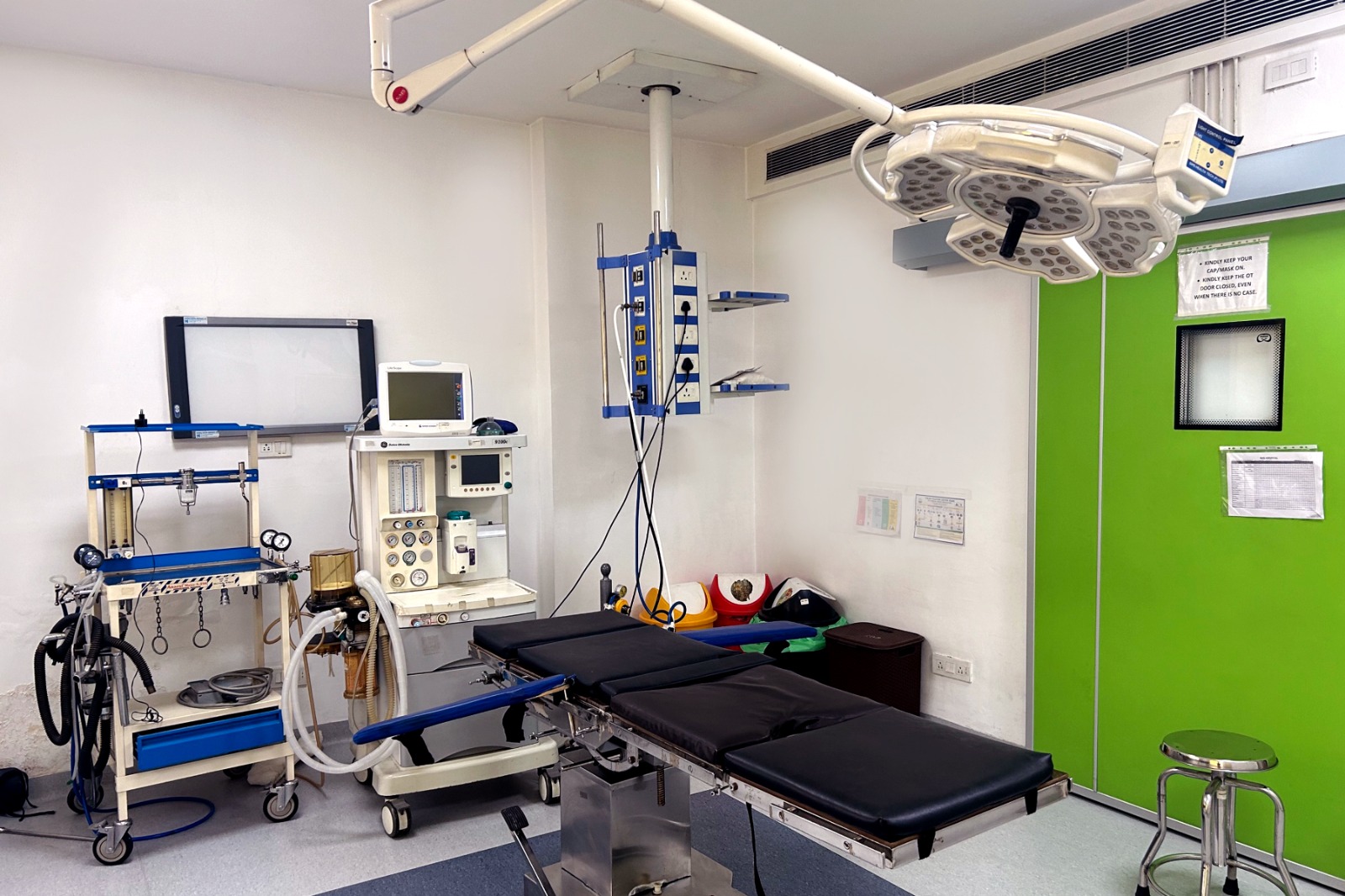
Theatres kitted out for keyhole work and for long, difficult operations alike: laminar airflow through HEPA filtration, imaging live on screen, and records handled without paper.
A consultant pathologist runs the laboratory on site. Blood work, pre-operative panels and health-check reports are processed here, so nothing has to be sent out and waited on.
Udaan, the physiotherapy team, works with inpatients and outpatients alike — rehabilitation programmes, plus the sessions that come before an operation and the ones that come after.
An ambulance fleet supports the emergency desk, with quick-response teams for stroke, cardiac and trauma calls.
A dedicated team works with major TPAs, public insurers and corporate health schemes to process your claims.
A machine can sharpen a decision; it cannot make one. Judgement stays with the consultant. What follows is simply the equipment and the rooms your treatment will pass through.
How we deliver clinical outcomes and a patient journey you can plan around.
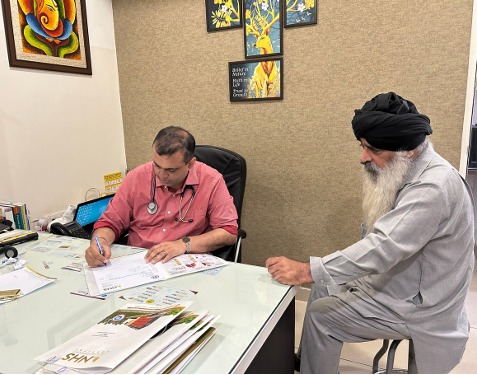
A senior consultant both plans your treatment and carries it out. Diagnostics are not delegated downward — the doctor who sees you in clinic is the one who operates and the one who does the ward round that matters.
Cardiology, nephrology, neurology, gastroenterology, orthopaedics and critical care sit on shared panels. Say a patient with a heart condition needs a joint replaced: both consultants agree the approach before a date goes in the diary.
The region's advanced robotic joint replacement centre. Partial and total arthroplasty are planned to sub-millimetric accuracy, with fast digital operating suites, silent MRI and low-radiation CT behind them.
The recovery room is not the finish line. Getting patients mobile early, on evidence-based protocols, and holding the line on infection control is what shortens a stay and gets normal function back sooner.
Every institute at NHS Hospital Jalandhar is run by a super-specialty qualified consultant — with on-site endoscopy suites, a cardiac cath lab, dialysis unit, robotic surgery and 24/7 critical care side by side.
Most consultant OPDs run Monday to Saturday, 10:30 AM to 3:00 PM, by appointment.
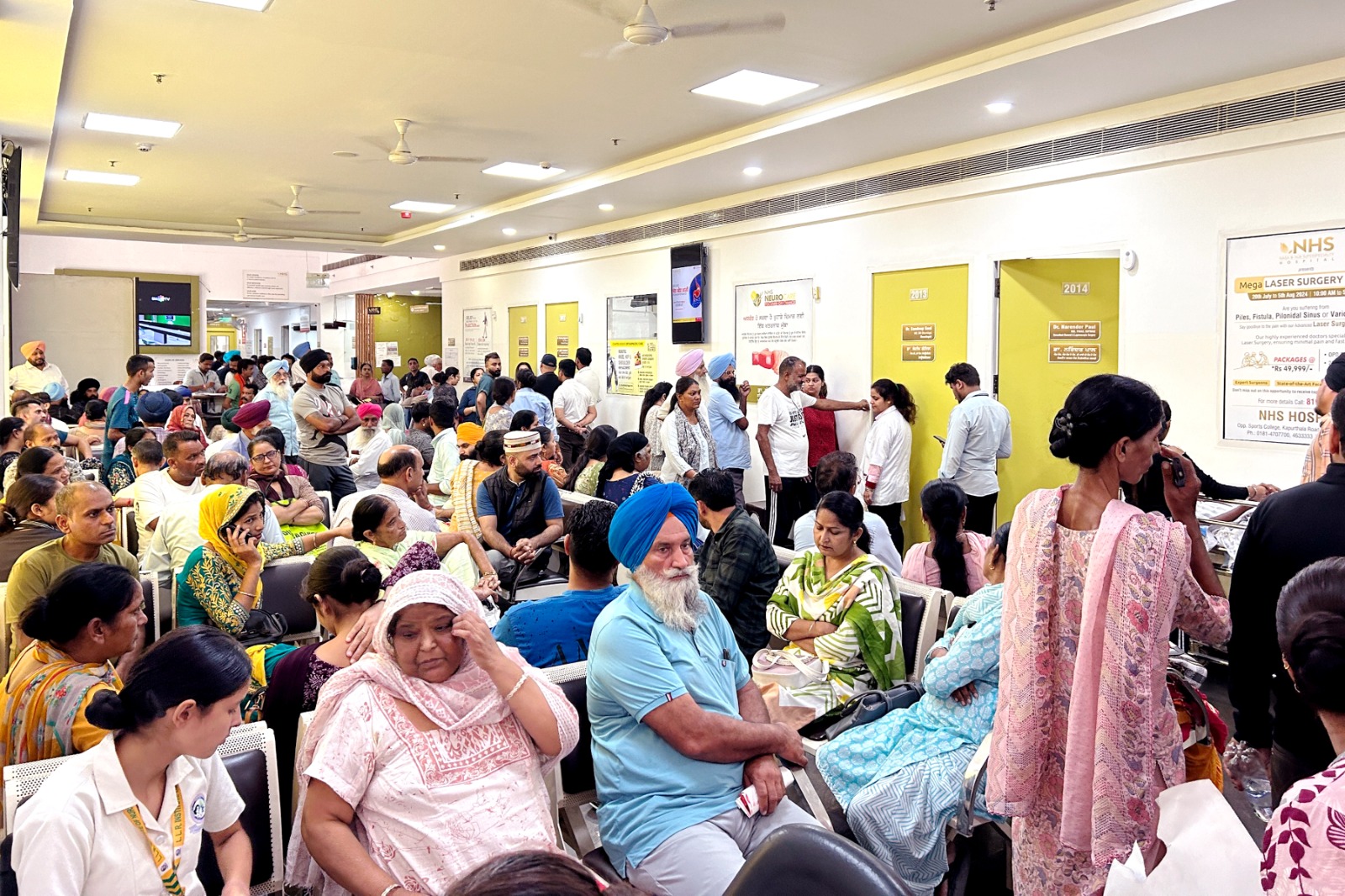
Twenty photographs taken inside the hospital — the scanners and theatres, and the ordinary working day around them. Tap any picture to open it full size.
Quality is not a department that sits alongside the surgical and therapeutic workflow — it is built into it. Structured audits, training that never stops and repeated safety checks are how the hospital-acquired infection rate is driven down towards zero.
Nothing reaches a theatre until the Central Sterile Services Department has cleared it. Instruments are sterilised to defined parameters and then checked twice over, chemically and biologically.
Complex cases go in front of a board — surgeons, physicians, radiologists and intensivists in one room. Arguing the plan out that way keeps it a clinical decision instead of a commercial one.
Three items come up at the Medical Quality Cell every week: antibiotic stewardship, prescription errors and incident reports. Once a month, the Clinical Audit Committee works through outcomes and readmissions.
Air in the operating rooms is pushed in one direction through HEPA filters, sweeping airborne contaminants away from the wound. Nowhere does that matter more than in joint replacement.
Antibiotics here are prescribed under tight control. Loose prescribing is what breeds multi-drug resistant organisms, and the cost of that lands on the whole community, not only on the patient in the bed.
Surfaces across the 45 intensive care beds are swabbed and cultured on a regular cycle. The patients lying in them have the least margin to absorb an infection picked up on the ward.
Most of the anxiety around a hospital stay comes from not knowing what comes next, and anxiety slows healing. So here is the whole route, end to end: the paperwork, the clinical part, and the weeks at home afterwards.
A patient relationship executive walks you through three things: the date, the estimate and the practical logistics. In parallel we start the pre-anaesthetic checkup, adjust any medication you are already on, and get the insurance approval confirmed — so nothing stalls on the morning itself.
On arrival you are routed through radiology, pathology or both. Reports land digitally within minutes and go straight to a senior consultant. If another department needs to weigh in, that happens now — not after a decision has already been made.
You are admitted into whichever ward or room category you selected. The senior consultant heading your case remains accountable for it throughout, with intensive care physicians reachable at any hour and nursing teams working to the written recovery plan.
On the day you leave, a complete medical summary is written up and the final TPA billing approval is pushed through. Before you walk out, someone sits with you over the medicines going home, how to manage the wound, what to eat, and who to ring if something changes.
The discharge folder you take home sets out diet, physiotherapy routines and the dates you are expected back. Three things then confirm that recovery is running to plan: booked physiotherapy sessions, tele-monitoring calls from the nursing station, and your consultant follow-ups.
Hand your policy card and ID over at the cashless desk when you are admitted. From there the coordinators take it: they assemble the clinical file, send it to your TPA and chase the response. Two to four hours is the usual turnaround.
Unsure whether neurosurgery or a robotic joint replacement falls inside your cover? Ring the TPA help desk on 0181-4707700, or send the policy card together with your doctor's recommendation to info@nhshospital.in and we will check it for you.
Hypertension, diabetes, arterial blockage and cancer rarely announce themselves early. These screens are banded by age, run inside the Executive Preventive Health Lounge, and are finished the same day.
A first baseline, for young professionals and anyone whose working day is mostly sitting down or mostly under pressure.
Built for people in mid-career whose family history already includes diabetes, raised blood pressure or heart disease.
For adults who want to stay active and independent through their fifties and sixties.
The widest screen we run, aimed at retired professionals, business owners and senior executives.
Customise your screen around a specific risk or family history.
Your time matters, so the check-up is optimised to be fast, private and thorough.
Two things a second opinion is for: making sure the diagnosis holds up, and making sure nobody has left an option off the table — minimally invasive techniques and robotic pathways included.
Turnaround is normally somewhere between 24 and 48 hours. But if this is happening right now — chest pain, stroke symptoms, a bad fall — do not use this route. Call the emergency desk on 0181-4707700.
Visa letter, airport pickup, everything in between — an international desk carries that load so your attention stays on getting well. Nor is there a queue to join: scans and major surgery are booked straight off the back of your arrival.
To start, email your reports to info@nhshospital.in or call 0181-4707700.
Our consultants hold regular OPDs outside Jalandhar, so a first review does not have to mean a long journey. Call 0181-4707700 to confirm the slot before travelling.
A 168-seat 3D HD auditorium takes a live feed from the operating suites, so robotic surgery and complex revisions can be watched in high definition as they happen. Surgeons come from right across North India to sit in on them.
Fellowship and research enquiries: info@nhshospital.in
Nobody should die in an emergency simply because the person standing next to them did not know what to do. That is the whole idea behind this programme. The target is a trained first responder in every school, every housing society and every home in Jalandhar — someone who can hold the situation steady until our specialists get there.
Disability has many causes, and the physiotherapy department builds a rehabilitation programme for each of them — sports medicine, rheumatology, general surgery, paediatrics, obstetrics, oncology, cardiothoracic, neurology and orthopaedics. The same team covers physiotherapy before an operation as well as after it, for inpatients and outpatients both.
Testimonials published by the hospital, across orthopaedics, spine and neurosurgery, cardiology, nephrology, hepatology and paediatrics.
Very good team of doctors in the modern equipped hospital. The hospital is very neat and clean with good infrastructure. The staff is also very polite and empathetic.
Our experience from the reception to the MRI Center and other laboratories was just perfect. The minute we entered I think half the battle was won as the whole hospital gave such confidence and a positive vibe. I wish Dr. Shubhang Aggarwal and his team members all the very best for this state of art hospital.
My friend from Kashmir underwent a knee surgery from NHS Hospital Jalandhar. We were hopeless if he'll be able to walk again or even resume playing volleyball. But thanks to Dr Shubhang Aggarwal for the treatment and incredible services of NHS staff that he is as fit as before. Patients get reminder messages and a call from reception before time. Hospital staff is very punctual and polite.
Over the years the regional papers have come back to NHS Hospital fairly often — Dainik Jagran, Dainik Bhaskar, Punjab Kesari, Ajit, Jag Bani, Hulchul Punjab and the Jalandhar Tribune among them. What is filed below is the whole archive as the hospital holds it: reports on the robotic joint programme, consultant comment on knees, hips and backs, and notices of camps, workshops and hospital occasions. Three of the items are not press coverage at all but adverts the hospital ran itself; they are marked as campaign creatives where they appear.
Two things worth saying plainly. Roughly three quarters of these cuttings are in Hindi or Punjabi. And only two of them carry a legible date, so the rest are grouped by subject rather than by year. Open any tile to read the clipping at full size.
Repeat printings, bone and joint explainers written for a general reader, public-health pieces from the COVID years, and three of the hospital's own NHS Ortho Robotics adverts.
Reported in Hindi and Punjabi: the workshops and symposia the hospital has hosted, the free screening camps, the days marked on the calendar, and the new services and outpatient centres as they opened.
The remaining twenty-seven cuttings are Hindi and Punjabi reports covering joint replacement, back pain, osteoporosis, seasonal joint pain and NHS camps. We have not labelled them individually, because the mastheads and datelines are not legible on every scan — open a tile to read the cutting itself.
Near Sports College, 300m from Kapurthala Chowk, Jalandhar — 144001. It is a 200-bed tertiary care hospital.
Use the form on this page, call 0181-4707700, or WhatsApp us your reports and we will route you to the right specialist.
Yes. A dedicated cashless and TPA helpdesk works with all major insurers, public insurers and corporate health schemes.
Yes. Our emergency department and critical care units run around the clock, with consultants available for heart, kidney and GI emergencies.
It is a multi-super specialty hospital, and the reputation sits mainly in six places: joint replacement and orthopaedics, neurosciences, cardiology, digestive sciences, kidney and urinary care, and critical care. It was also the first in the region to run robotic-assisted knee replacement.
It means nobody hands the important decisions down the ladder. The senior consultant designs the pathway, does the critical surgery and takes the ward round personally — and the same seniority applies to reading your diagnostics and to checking your progress after the operation.
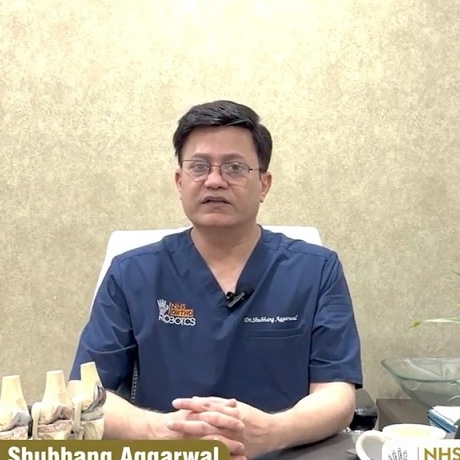
Dr. Shubhang Aggarwal, M.Ch. Orth (UK). He is a senior consultant, trained overseas in joint replacement, with thousands of robotic procedures behind him.
Five things: photo ID issued by the government (Aadhaar, passport or voter ID); the original policy card for your health insurance; your recent diagnostic reports; the prescriptions you are currently on; and the referral slip, if your own doctor wrote one.
There are two windows: 11:00 AM to 12:00 PM in the morning, then 5:00 PM to 6:30 PM in the evening. One visitor at a time, holding a valid pass. It sounds strict, but it is how recovering patients get rest and how the wards stay clean.
Usually two to four hours. Give your policy card and ID to the cashless desk when you are admitted; the coordinators build the clinical file, send it to your TPA and follow it up from there.
Four things, in order: your consultant reviews you one last time; the nursing desk writes up the medical summary; the final TPA billing approval clears; and someone then briefs you on take-home medicines, wound care, diet and when to come back.
Yes — on every operation, without exception. Compliance runs at 100%, and the internal hospital quality committee audits it on a regular cycle rather than taking it on trust.
Once the imaging and reports reach our coordinator, the panel normally comes back inside 24 to 48 hours. Anything acute, though — chest pain, stroke symptoms, a fracture — belongs with the 24/7 emergency desk, not with this route.
Yes. The international desk writes the medical invitation letter your Indian High Commission will want, walks you through FRRO registration, meets you at Amritsar (ATQ) or New Delhi (DEL), sorts lodging for whoever travels with you, and provides translation support during the stay. Start by emailing your reports to info@nhshospital.in.
Call the department directly, or use the general board lines for admissions and enquiries.
NHS Hospital, near Sports College, 300m from Kapurthala Chowk, Kapurthala Road, Jalandhar, Punjab 144001.
Board line 0181-4707700 · info@nhshospital.in
Arriving by train or coach, pick up an auto or taxi at Jalandhar City Junction or the Jalandhar Bus Stand. Local buses set down at Kapurthala Chowk, leaving a 300m walk to the gate.
Two windows daily — 11:00 AM to 12:00 PM, then 5:00 PM to 6:30 PM. One visitor at a time, carrying a valid pass.
NHS Hospital — near Sports College, 300m from Kapurthala Chowk, Jalandhar — 144001.